Saturday, October 10, 2015

Columbus Blog

Should Christopher Columbus be considered a hero or villian?

When we were younger we were taught that Christopher Columbus discovered America, and because of that I thought very highly of him. As my schooling progressed, I began to learn that Columbus wasn't all that I thought he was. Through his awful actions towards natives he proved himself to be more of a villain than a hero. To a great extent, Christopher Columbus is a villain, and to a lesser extent he is a hero.

To a greater extent, Christopher Columbus is considered a villain. When Columbus and his men first arrived in the New World, they brought with them many diseases such as small pox. Since the natives did not have resistance to these diseases, millions died as a result. Columbus also spoke about the natives and how they would "...make fine servants..." Columbus exploited the Indians, making them into slaves and taking over their land. His discovery of the Americas opened doors to future conquistadors who would continue to exploit natives, loot and slaughter villages such as the Aztecs and Incas. As governor of Santa Domingo on Hispaniola, he was a despot who kept all profits for himself and his brothers, and was loathed by the colonists whose lives he controlled.

To a much lesser extent, Christopher Columbus is considered a hero. Columbus was an experienced and talented sailor, navigator and ship captain. He bravely set off to the west without a map, trusting his instincts and calculations to guide him forward. Despite looking for a faster route to the west, he stumbled upon the Americas, beginning the movement to the west that changed the future forever.

Overall, Christopher Columbus should be recognized as a villain more than a hero, both because of his actions and the outcomes that came from them.


Thursday, October 8, 2015

LAD #9: Jefferson's First Inaugural Address


Jefferson's First Inaugural Address Summary

Jefferson begins his speech by expressing his gratefulness in being elected the President, but states that the tasks are too great for his talents. He says that he "...shall find resources of wisdom, of virtue, and of zeal…" to help him through these difficult tasks. He says he will look toward legislature (Congress) and others for advice. He goes on to speak about how we must "...unite in common efforts for the common good…" and how we are all Republicans, and we are all Federalists. Jefferson speaks about how we must be tolerant of other groups, religious, minorities, etc. The minorities will be able to possess their equal rights, and have those rights be protected. Jefferson encourages the republic form of government by saying that it will work and that it will continue to work better for the United States than any other. He says that we are separated by an ocean from the other powers of the world, so we are left to develop our own Republican and Federalist views and develop our own attachment to our representative government and united country. Jefferson then lists what he believes to be the most important Constitutional principles to run the government at all times: equal and exact justice to all men, honest friendships with all nations, no alliances, the support of state alliances, the preservation of the Federal government, the preservation of the right to vote and elect, the preservation of the right to decide by the majority, a keeping of a well-disciplined militia, the supremacy of civil over military authority, economy in the public expense, honest repayment of debts, the preservation of the nation's faith, encouragement of agriculture and commerce, the diffusion of information for public reason, freedom of religion, freedom of the press, and the preservation of the habeas corpus. Jefferson ends his inaugural address by saying that he will uphold these principles to the best of his ability, but he that he won't be a perfect president. He asks the public to forgive him when he does make unintentional mistakes.


Wednesday, September 23, 2015

LAD #7: Washington's Farewell Address

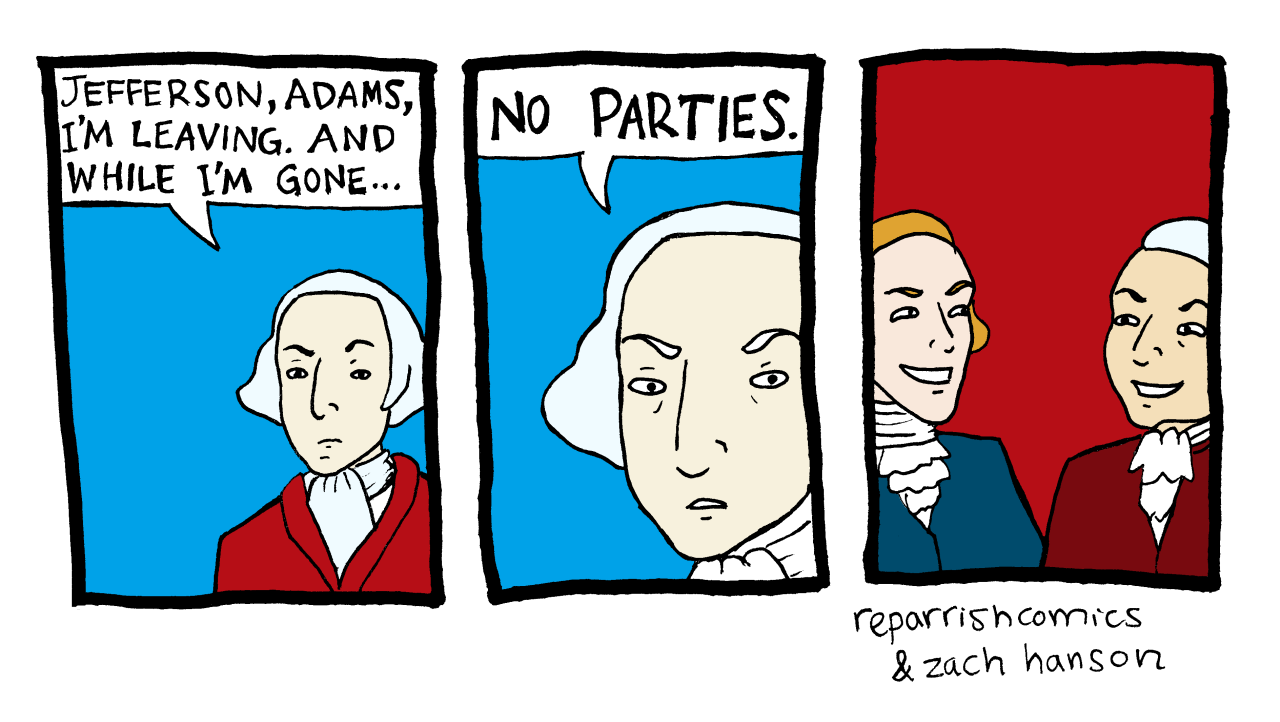
The address begins with Washington thanking everyone for their support. He reveals that he won't be running for president for a third term, a decision that makes a 2 term presidential length the precedent until after FDR. He felt he had done enough for the country, and made the decision based on personal reasons, not political. He had some advice to leave with the people. He spoke about how unity must be held very dear to the Americans. It is the "main pillar...of your real independence." He also warned the people about the dangers of factions and political parties. He believed that they would distract the people and government from the more important matters. They would pit fellow Americans against each other and only cause unrest. Finally, he wished that his Proclamation of Neutrality, published 3 years earlier, continue. He wants the United States to remain neutral during other conflicts going on in Europe.


LAD #6: Washington's Proclamation of Neutrality

Washington's Proclamation of Neutrality, written in 1793, states that the United States will be impartial to all countries, regardless of whether or not they were in war at the time. He also warns the Americans to not aid or hinder these powers. If they do, they "will not receive the protection of the United States." All in all, the proclamation was stating that the United States would remain neutral to all countries, not showing any partiality.


LAD #5: Federalist #10

1.  Why are factions so difficult to eliminate?
Factions are difficult to eliminate because people who have the same set of beliefs and ideas often congregate together. Factions are "sown in the nature of  man." It is difficult for the government to control this natural organization of people, without taking away natural liberties.

2.  If factions cannot be removed then how can they be controlled?
To control factions, the effects of them must be controlled. Minority factions, being the minority, will not stand against majority factions. To control this, the majority faction should be prevented from oppressing the minority. 


Sunday, September 20, 2015

Republican Motherhood Blog

1. What role did the Revolutionary War play in the transformation of housewifery to Republican Motherhood? Republican Mothers have the responsibility to raise their sons to be the next generation of men. American soldiers during the Revolutionary War fought to defend their lives and the liberty of the American people. Over time, new generations can often forget what happened over the course of the war, as they were not born to witness it. A Republican Mother's role was to teach her sons about the soldiers that were in the war and how they fought to defend their values (Doc. C).

2. What were the consequences of Republican Motherhood on women? Women became more confined to the household as "That woman should regard home as her appropriate domain is not only the dictate of religion, but of enlightened human reason (Doc. A)." It became her duty, not only to God but also to her country, to stay in the home.
 

3. What is the significance of the ideology of Republican Motherhood as a stage in the process of women’s socialization?  Setting the stage for the process of women's socialization, Republican Mothers gained much more respect. In order to teach their son's about the history of their country, they could now be educated in those matters as well (Doc. B). "The solidity and stability of the liberties of your country rests with you," as it was believed that without these women, the knowledge of the country being passed on to further generations wouldn't be possible (Doc. C).

Mary Gibson Tilghman and her sons by Charles Willson Peale (1789)

1. Describe the setting. Mary Gibson Tilghman is sitting on a couch in a mostly plain and empty room. Her two sons are sitting on her lap. 


2. Who serves at the center of the portrait and why?  How does the woman look?  How is she “republican” rather than aristocratic? Mary Gibson Tilghman is centered in the portrait as she now runs the house. She is in charge of regular household duties along with the education of her sons, giving her some authority. She looks very poised and also proud. It seems as though there is light radiating off her skin. She is more "republican" rather than "aristocratic" because her clothing is more modest and less flashy. She looks more down to earth and homey, rather than being done up with makeup.

3. What values do her sons exhibit? Her sons appear to be very young. Even so, they seem to be very mature. The fact that they are able to sit still, or so it seems, for the painting of this portrait is very impressive. They appear to be well dressed, and like their mother they seem proud.


4. Is there a significance to the position of Mrs. Tilgham’s arm? Mrs. Tilgham's arm is draped over her son's lap. This asserts that she has power over him. It also shows that she will be significant in their growing up and learning to be well fit men of society. Her arm also represents her role as a mother in that she will protect him in life.

Tuesday, September 15, 2015

Blog #4 - Revolution Article

List 5 things you learned after reading "Rethinking the Revolution" by John Ferling

1. The Revolutionary War was not a particularly horrendous war - didn't have an exceedingly large death toll. Few civilians were injured or killed and there wasn't widespread suffering.

2. The Civil War started as a war and became a revolution. The War of Independence started as a revolution and became a war. This is important because to those in the Revolutionary era, war and breaking from the monarchy was unheard of at the start of the Revolution. On the contrary, the Civil War was a fight to save the Union from the beginning.

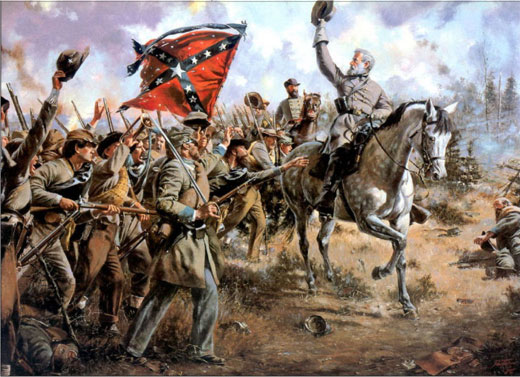
3. Besides Abe Lincoln, the best remembered members of the Civil War were all military men - Generals Robert E. Lee, Ulysses S. Grant, William T. Sherman, and Stonewall Jackson. That differs completely from the best remembered members of the Revolutionary War - Ben Franklin, Jon Adams, Patrick Henry, Thomas Jefferson, John Hancock.

4. Unconsciously, the next generation of Americans (post Independence era) downplayed the significance of the Revolutionary War because the Civil War had six times as many people perish. This also occurred with the "Great War" (WWI) to WWII. When World War II came around, it was a greater war than  WWI, and many people in the new generation forgot how terrible the first World War truly was.


5. During the Revolutionary War, the British were never forced to overcome such large hardships as the Patriots had to. For example, when the Americans who invaded Canada ran so short of food, they consumed pet dogs and made a soup form boiled shoes and melted candles. George Washington wrote many times that his men were nearly naked, not having many clothes, and leaving bloody footprints on the snow because they didn't have shoes.